Outdoor event - how to organize and mark the area?

Regardless of whether it's a concert, company picnic, street run, or local fair – proper site marking and compliance with formal requirements are absolutely essential.
Regulations and Formal Requirements for Organizing Outdoor Events
Before planning begins, it's necessary to check what permits are needed. Depending on the scale of the event, a notification to the city or commune office may be required. It's also necessary to secure the area – both in terms of protection and access to medical assistance. If the event takes place on private property, the owner's consent must not be forgotten.
Some events, such as marathons or concerts, may require additional permits – e.g., for road closures or the use of high-power sound systems. It's advisable to consult with relevant institutions in advance to avoid last-minute problems. Furthermore, organizers should remember to insure the event to avoid unforeseen costs in case of unforeseen circumstances.
How to Prepare the Outdoor Event Area?
When organizing an outdoor event, proper spatial planning is important. The zones designated during an outdoor event largely depend on the nature of the event, but the following areas can usually be distinguished:
- Entrances and exits – should be well-marked, adapted to the expected number of participants.
- Stage and area for artists/speakers – separated from the audience, ensuring comfort for performers and secured against accidental interactions with the crowd.
- Catering points – located in convenient places so that participants can easily reach them without disrupting movement.
- Sanitary and hygiene zones – toilets, drinking water points, and handwashing facilities, whose location should ensure comfort for all participants.
- VIP zone – a space separated from other zones, ensuring comfort and privacy for invited guests.
- Medical and evacuation points – appropriately marked and easily accessible, to ensure safety if needed.
Fencing and Securing the Event Area
Solid fencing helps organize the space and guarantee participants a sense of security. It allows organizers to separate individual zones and restrict access to technical facilities, staff areas, or spaces intended for special guests. Depending on the nature of the event, temporary fences, barriers, or other structures can be used to create a clear boundary and help manage traffic.
Barriers
Barriers are useful in the busiest areas, such as around the stage, entrances, or catering points. They facilitate traffic flow and prevent the formation of uncontrolled crowds.
Fencing Foils
A good complement to fences are fencing foils. They help visually separate zones and cover areas not intended for the public – such as backstages, storage, or parked technical vehicles. Such a solution suits various types of events – from concerts and trade fairs to corporate and sports events.
Warning Tapes
In organizing space, warning and barrier tapes also play a significant role. Red and white fencing warning tapes and black and yellow ones signal potential danger or restricted access, which is why they often appear in places requiring special attention. In turn, fencing warning tapes with custom print – e.g., with the event logo or slogan – reinforce visual identity and emphasize the professional nature of the event.
Tapes are also great for marking routes during sporting events. Organizers of marathons, cycling races, or rallies often use them to mark the course of the route, start and finish zones, and technical areas.
-

Non-adhesive Red-White Barricade Tape 20 µm (various sizes)
fromnetto6,56 zł -
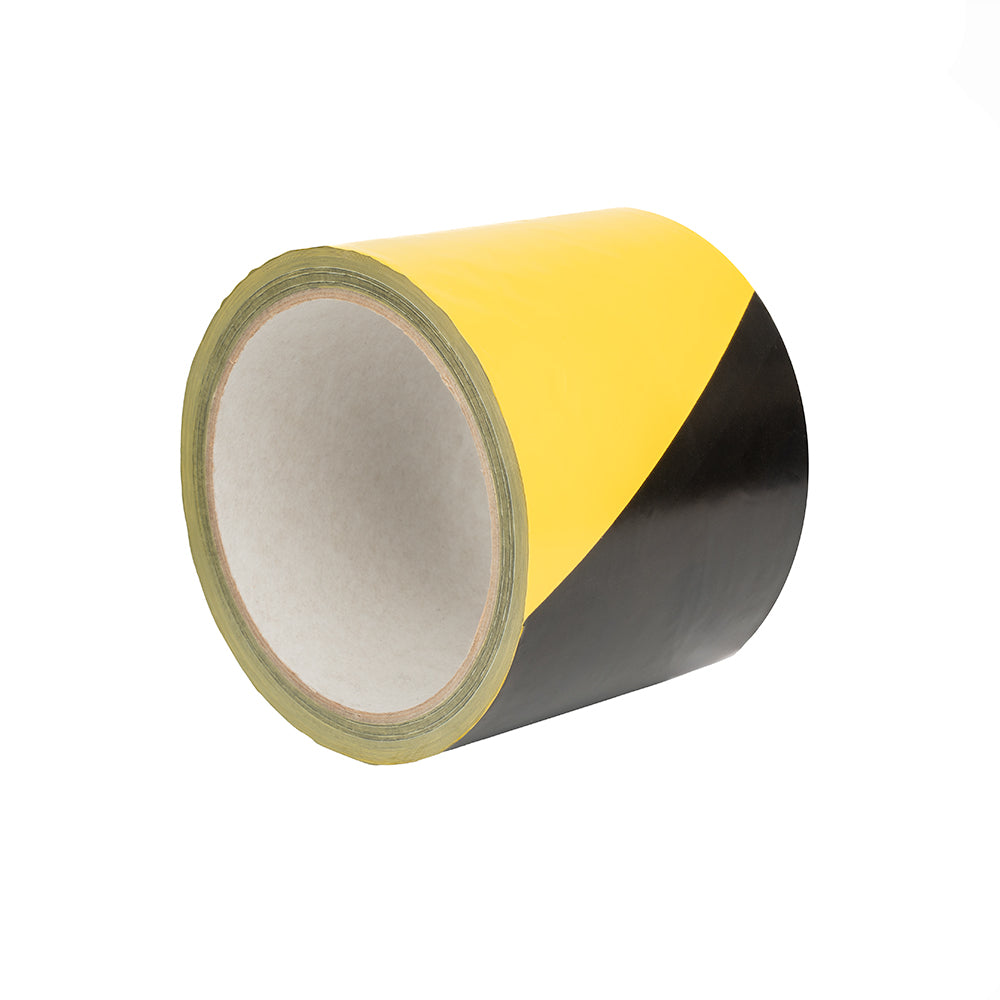
Non-adhesive barrier tape, black and yellow, 75 mm x 90 m
fromnetto7,00 zł